


Diagnostic services play a vital role in healthcare by helping doctors detect diseases early and plan effective treatment. The sector broadly includes three main areas — pathology, which covers laboratory tests such as blood and urine analysis; radiology, which uses imaging technologies like X-ray, ultrasound, CT scan and MRI; and molecular diagnostics, which involves advanced testing of DNA, RNA, and proteins to identify diseases.
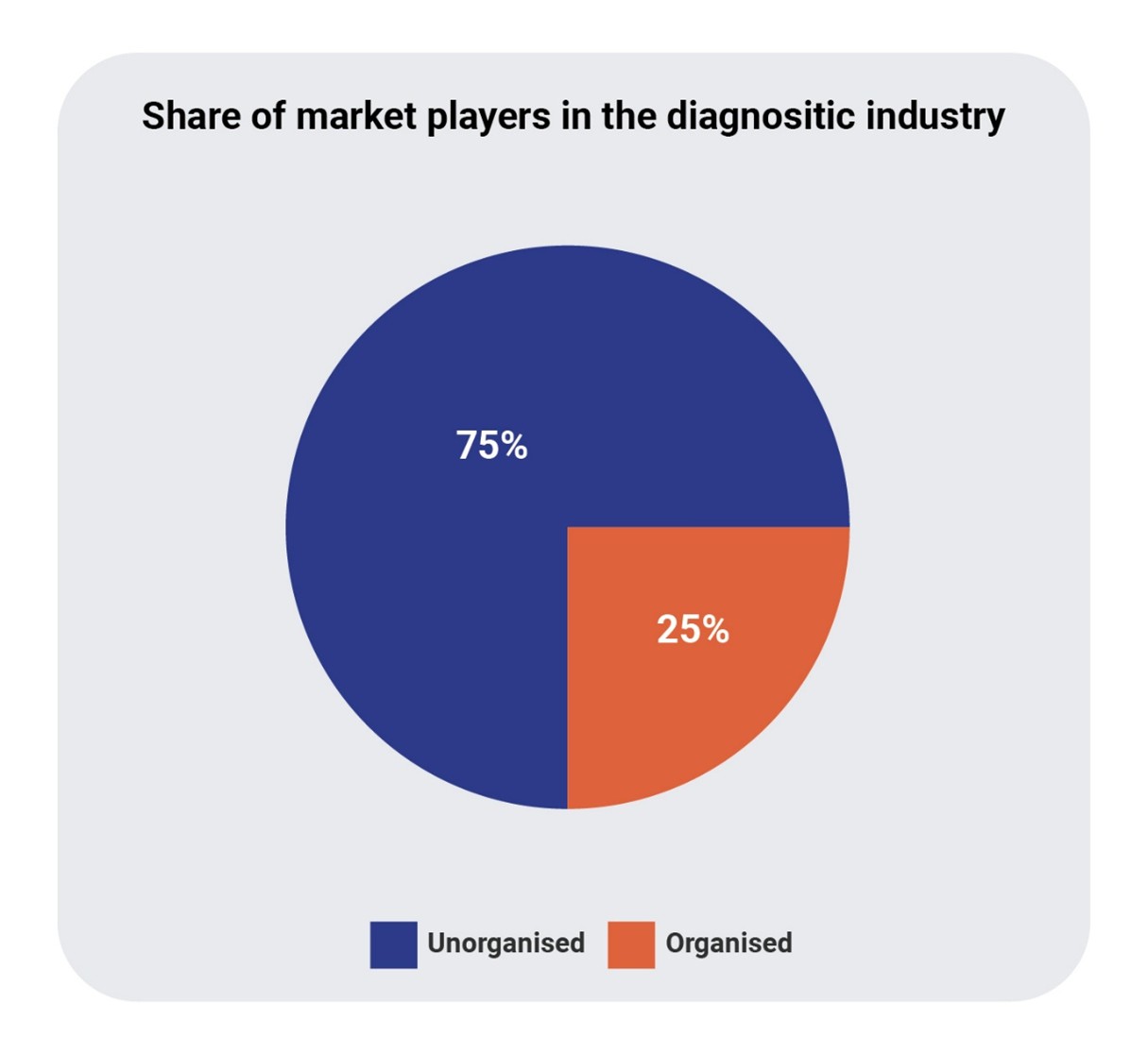
India’s diagnostics market has grown rapidly in recent years. This growth, however, has come with challenges. Because of low entry barriers and limited regulation, the sector has become highly fragmented, with many small and unorganised players leading to variations in quality, pricing, and the speed at which new technologies are adopted — all of which can affect public health and slow the industry’s long-term progress.
With 65% of the country’s population below the age of 35, India has one of the world’s youngest demographics. As awareness around preventive healthcare increases, more people are turning to regular diagnostics rather than waiting until they get sick. Nearly 70% of all medical decisions are based on diagnostic results. As technology advances, especially with the rise of data analytics and artificial intelligence, diagnostic data will play an even greater role in predicting diseases and improving treatments in the future.
The government has also taken several steps to promote preventive healthcare and make diagnostic services more accessible. Initiatives such as Ayushman Bharat (AB-PMJAY) to provide affordable care, including diagnostics, to a large section of the population. An offline mode for creating Ayushman Bharat Health Accounts (ABHA) has been introduced to ensure accessibility in remote areas. As of January 2025, over 73 crore ABHA have been created, with more than five lakh health professionals registered on the platform. Similarly, the National Health Mission (NHM) and various public-private partnership (PPP) models are helping to strengthen healthcare delivery and infrastructure across India.
Tier-1 Metropolitan cities like Mumbai, Delhi, Bengaluru, Chennai, and Hyderabad host majority of the diagnostic services chains in India. This is due to their well-established healthcare ecosystem, skilled professionals, and patient volume.
While Tier-2 and 3 cities in India have historically struggled with accessibility to healthcare facilities, there has been a shift resulting from technological advancements and awareness regarding preventive healthcare. Driven by strategic investment, Tier-2 and 3 cities are set to mirror their counterparts in terms of infrastructure and quality of services.
Despite this progress, one major challenge continues to affect the sector - the high cost of equipment. Diagnostic companies are highly asset-intensive and require expensive machines such as MRI and CT scanners to operate. For small and mid-sized diagnostic centres, buying these machines outright can be extremely difficult. Equipment that is state-of-the-art today may become outdated in just a few years, making upgrades and replacements costly and creating financial strain.
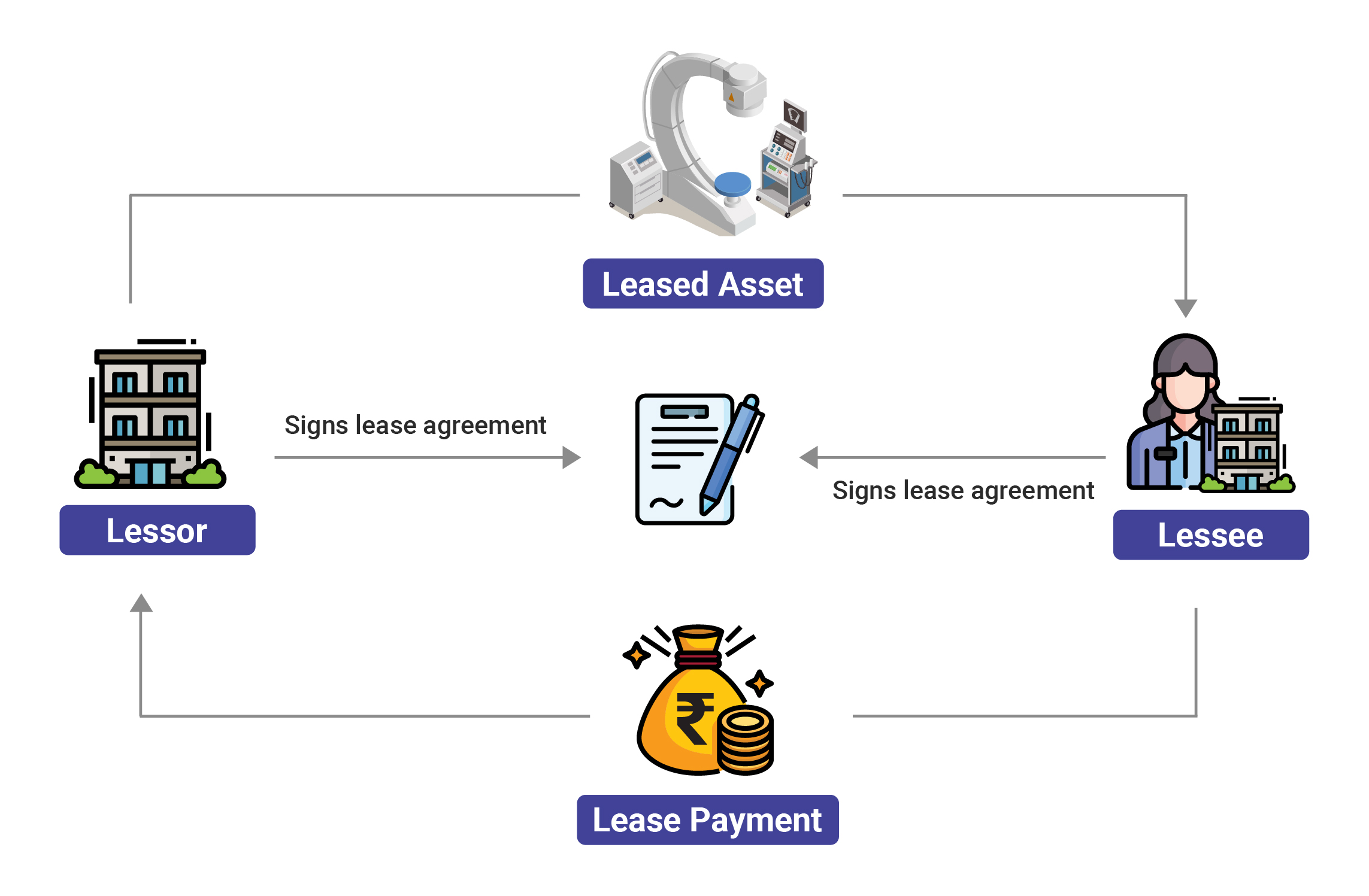
Asset leasing offers a practical and flexible solution to this problem. It allows diagnostic companies to use the latest equipment without having to buy it. Under this model, they can lease the equipment for a fixed period, pay periodic instalments, and at the end of the term, decide whether to purchase, renew, or return it. This system is usually offered by Non-Banking Financial Companies (NBFCs) and specialised leasing operators, which can tailor financing solutions for smaller enterprises that may not have long credit histories or the financial profile needed to borrow from traditional banks.
By choosing to lease instead of buy, diagnostic providers can reduce their upfront costs and preserve cash for other needs such as expanding operations, repaying existing debt, investing in innovation, or upgrading infrastructure. Leasing also helps them stay current with technology while maintaining financial flexibility. For mid-sized healthcare facilities, it is often a more economical and convenient way to access advanced medical equipment and ensure high-quality patient services.
In addition to the above, the lease rentals are tax deductible, meaning lease rentals are treated as business expenses and often can be fully deductible from the income statement reducing taxable income.
India’s diagnostics market, valued at ₹1.5 lakh crore in FY24, is projected to grow by 11–14% annually over the next five years. As the sector continues to evolve, asset leasing will become more than just a financial instrument — it will be a growth enabler for smaller and mid-sized diagnostic facilities. By reducing financial barriers and encouraging technological upgrades, leasing can help make quality diagnostics more affordable and accessible, not just in metros but across the length and breadth of the country.
Note: An abridged version of this article has been published in various Ahmedabad print publications viz. Ahmedabad Express, Gujarat Mail, Gujarat Pranam, Karnavati Express, Prabhat Daily, and Standard Herald between 26th to 29th November 2025.
The views provided in this blog are those of the author and do not necessarily reflect the views of Vivriti. This article is intended for general information only and does not constitute legal or investment advice.
Copyright © 2023 Vivriti Capital. All Rights Reserved
Under Construction
Please fill in the details
to cancel the NACH mandate

Please fill in the details to cancel the NACH mandate

Ms Namrata Kaul brings on board over 30 years of global banking experience. She has served as the Managing Director, Corporate and Investment Banking at Deutsche Bank AG. Prior to that she was Head of Asia Business for Deutsche Bank based out of London, involved in multi country interface. Ms Kaul has been involved in developing the strategy roadmap for Deutsche Bank India as part of the India Board and was instrumental in defining and executing the Asia Focus strategy for the EMEA business. She was the founder of Deutsche Bank's Diversity initiative in India. Ms Kaul had earlier worked with ANZ Grindlays Bank in various leadership roles across Treasury, Corporate Banking, Debt Capital Market and Corporate Finance in India and the UK.
Ms Kaul serves on the Board of CARE International. She is a Management Postgraduate from IIM Ahmedabad and has completed a Chevening scholarship on Leadership from London School of Economics.